
, Finance
MyBank Launches IskuFilan to Expand Financing Access for Somali Women Using Gold as Collateral
Women are a vital part of Somalia’s economy, contributing significantly to businesses, households and communities. Yet access to formal financing remains a major challenge for many Somali women.
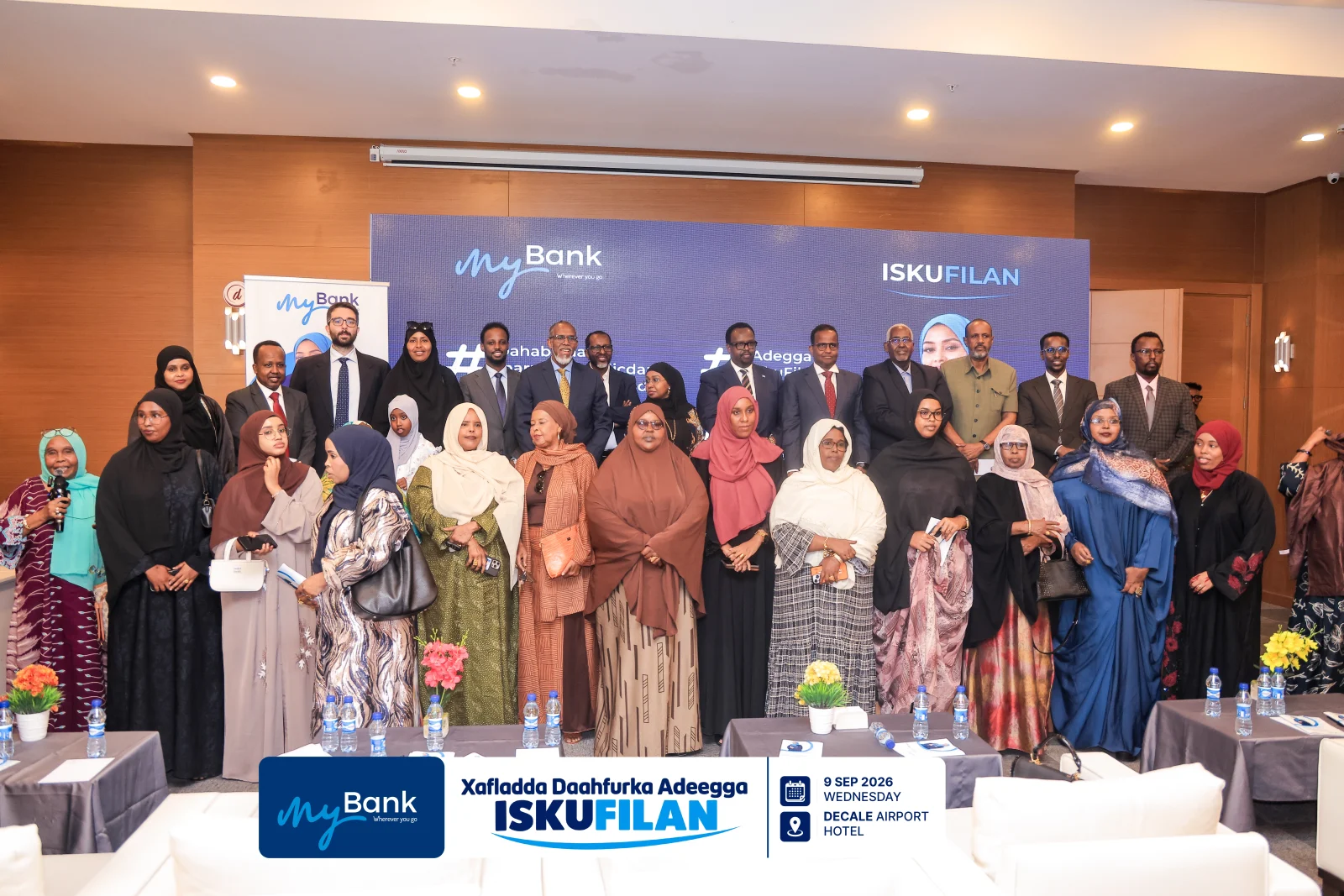
Women are a vital part of Somalia’s economy, contributing significantly to businesses, households and communities. Yet access to formal financing remains a major challenge for many Somali women.
Across Somalia, women account for only around 10% of financed clients, demonstrating a significant gap in access to financing. One of the key barriers is collateral: many women do not own titled property, such as a house or land, that can be presented when applying for financing. The need to secure a personal guarantor can create an additional obstacle.
These barriers can limit opportunities for women who want to start businesses, expand existing enterprises, invest in productive activities or meet important financial needs.
At MyBank, we believe financial solutions should respond to the realities and needs of the communities we serve. To help address these challenges, MyBank officially launched IskuFilan on 9 September 2026, a financing service designed specifically to expand financing opportunities for Somali women.
An Alternative Path to Financing
IskuFilan enables eligible women to use gold as collateral, providing an alternative to property collateral and personal guarantor requirements.
Rather than selling their gold to raise funds, customers can use its value to access financing
while retaining ownership of the asset.
Through this approach, MyBank aims to create an additional pathway into formal financing for women who may otherwise find conventional collateral requirements difficult to meet.
Turning Existing Assets into New Opportunities
Gold is an important asset for many Somali women, but its economic value may often remain unused.
IskuFilan gives eligible customers an opportunity to put that value to productive use.
The financing can support women who want to establish a new business, expand an existing enterprise, increase working capital, purchase equipment or supplies, and pursue other income-generating activities.
It can also support important needs such as education, healthcare and essential family requirements.
In this way, an asset traditionally held for personal value can also become a source of opportunity.
Supporting Women, Businesses and Families
The potential impact of IskuFilan goes beyond access to financing.
For a woman running a small business, access to additional capital can mean purchasing more stock, investing in equipment, expanding operations or creating new income opportunities.
For women seeking to establish new businesses, financing can provide the resources needed to turn an idea into an economic activity.
It can also help customers meet essential education, healthcare and household needs without having to permanently sell their gold.
By enabling more women to participate in productive economic activities, IskuFilan can
contribute to stronger businesses, more resilient households and increased economic
participation among Somali women.
Advancing Financial Inclusion for Somali Women
IskuFilan represents MyBank’s response to an important financing gap.
With women continuing to represent a relatively small share of financed clients in Somalia,
improving access to appropriate financial solutions can help increase their participation in the formal financial system.
Through IskuFilan, MyBank aims to expand access to financing, support women-led
economic activity and contribute to greater financial inclusion in Somalia.
By enabling eligible women to use gold as collateral, the service creates an alternative financing pathway that can help women invest in businesses, generate income, support their families and pursue new economic opportunities.
IskuFilan is more than a financing service. It is an opportunity to help more Somali
women turn the assets they already own into pathways for business growth, financial resilience and greater economic participation.